

Collection: Drones with 3 Axis Gimbal

-

4K Long Range Drone with 3-Axis Gimbal, 7-Inch Screen Controller & GPS Return – WindForce X
Vendor:TODAMURegular price $451.90 USDRegular price$562.00 USDSale price $451.90 USDSave 19% -
Follow Me Drone with 4K Camera & 3-Axis Gimbal – WING 6S
Vendor:TODAMURegular price From $401.99 USDRegular price$509.00 USDSale price From $401.99 USDSave 21% -
4K GPS Drone with Screen Controller & Payload Drop – WING 3S
Vendor:TODAMURegular price From $401.99 USDRegular price$508.00 USDSale price From $401.99 USDSave 20% -
8K AI Drone with Screen Controller & Obstacle Avoidance – Wing One
Vendor:TODAMURegular price $299.00 USDRegular price$359.00 USDSale price $299.00 USDSave 16% -
WindVision Optic Pro Dual-Camera Drone with 48MP CMOS & 10X Zoom
Vendor:TODAMURegular price $599.99 USDRegular price$729.00 USDSale price $599.99 USDSave 17% -
Windforce Mini 4K Drone Under 250g with Screen Controller
Vendor:TODAMURegular price $429.00 USDRegular price$599.00 USDSale price $429.00 USDSave 28%


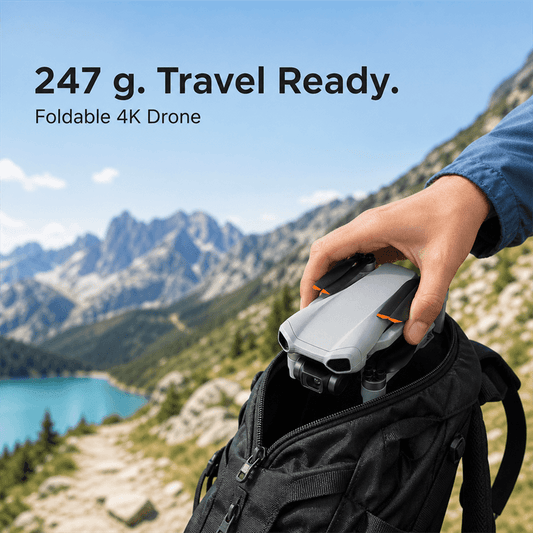
Why Stabilization Matters for Aerial Video?
A 3-axis gimbal physically keeps the camera steadier as the drone pitches, rolls, and turns. That stability helps preserve a level horizon and smoother motion, especially during travel filming and outdoor flight.
Which 3-axis gimbal drone should you choose?
TODAMU drones with 3-axis gimbal stabilization are made for users who want smoother aerial footage, steadier camera movement, cleaner panning shots, and more usable outdoor video. A 3-axis gimbal drone is especially helpful for travel videos, aerial photography, open-field flying, scenic recording, and creator-style outdoor content.
Many buyers focus only on 4K or 8K resolution, but resolution alone does not guarantee good video. If the camera shakes during turning, hovering, or outdoor flight, the footage may still look unstable. A drone with 3-axis gimbal support helps keep the camera more stable, which can make the final footage easier to watch, edit, and share.
This collection is best for users who want smoother video, GPS-supported outdoor flying, screen-controller options, longer shooting time, and better camera stability than basic fixed-camera drones.
If you are still learning composition, camera setup and shot planning, use these drone photography tips for beginners before comparing camera and stabilization features.
Best TODAMU drones with 3-axis gimbal
| User need | Recommended TODAMU drone | Why it fits |
|---|---|---|
| Best 3-axis gimbal drone under $500 | WindForce X | 3-axis stabilized gimbal, 7-inch screen controller, GPS return, long flight time, and outdoor aerial video support. |
| Dual camera and AI tracking videos | WING 6S | Dual camera, AI tracking, 3-axis gimbal, GPS return, long flight time, and creative outdoor shooting features. |
| Outdoor use with payload drop | WING 3S | GPS return, 3-axis gimbal, screen controller, obstacle avoidance support, and light recreational payload drop. |
| Smart camera drone with stabilization support | Wing One | Smart camera features, GPS support, screen remote, obstacle avoidance positioning, and stabilization support for creative beginner videos. |
Best for
- Travel videos
- Aerial photography
- Outdoor scenery recording
- Hiking, camping, road trips, beaches, parks, and open-field flying
- Users who want smoother footage than fixed-camera drones
- Beginners who want better camera stability while learning outdoor flying
- Creator-style users who want smoother camera movement without professional drone pricing
Not best for
- Indoor toy-style flying
- Drone soccer or FPV ball drone practice
- Very young kids who only need a simple practice drone
- Professional mapping, surveying, or industrial inspection that requires certified enterprise equipment
- Flying in restricted areas, crowded spaces, strong wind, rain, or unsafe outdoor conditions
3-axis gimbal drone vs regular camera drone
A regular camera drone may have a fixed camera or basic electronic stabilization. A 3-axis gimbal drone adds stronger camera stabilization, helping the camera stay steadier during movement, turning, hovering, and outdoor recording.
| Feature | 3-axis gimbal drone | Regular camera drone |
|---|---|---|
| Camera stability | Helps keep footage smoother during movement | May show more shake during turns, wind, or direction changes |
| Video quality | Better for travel videos, aerial photography, and outdoor content | Better for simple photos, casual clips, or beginner practice |
| Horizon control | Helps keep the camera more level | May tilt more when the drone moves |
| Best use case | Outdoor filming, smoother panning shots, scenic videos, creator content | Basic learning, short-range practice, casual camera use |
| Buyer value | Worth prioritizing if smooth footage matters | Good if price and basic flying matter more than video smoothness |
A gimbal should move smoothly and return to a level view after startup. If the horizon stays tilted, use the drone gimbal not level troubleshooting guide to check the surface, cover, calibration, wind, and possible impact damage.
Should You Prioritize a 3-Axis Gimbal or Higher Resolution?
Choose according to the result you want. A gimbal controls camera movement, while 4K or 8K describes image resolution. For smoother aerial video, prioritize stabilization first, then compare resolution, bitrate, and other camera specifications.
| Buyer question | Better answer |
|---|---|
| Should I choose higher resolution or a gimbal? | If you mainly record video, prioritize stabilization first, then compare resolution. |
| Does 4K automatically mean smooth video? | No. 4K affects detail, while a gimbal affects stability and movement smoothness. |
| Do beginners need a 3-axis gimbal? | Beginners who want good video quality can benefit from a 3-axis gimbal, especially outdoors. |
| Is a gimbal useful for photos? | Yes. A steadier camera view can help with framing, composition, and cleaner aerial shots. |
Common use cases for drones with 3-axis gimbal
| Use case | Best TODAMU option | Why a 3-axis gimbal helps |
|---|---|---|
| Travel videos under $500 | WindForce X | The 3-axis gimbal, 7-inch screen controller, GPS return, and long flight time help capture smoother outdoor footage. |
| Aerial photography | WindForce X or WING 6S | Stable camera movement helps users frame landscapes, homes, parks, roads, and open outdoor scenes more clearly. |
| AI tracking videos | WING 6S | AI tracking and gimbal stabilization help create smoother movement shots in open outdoor areas. |
| Open-field, ranch, or large backyard viewing | WING 3S or WindForce X | GPS return, long flight time, and stabilized camera viewing are useful for checking open outdoor spaces from above. |
| Creative beginner videos | Wing One | Smart camera modes, screen remote control, GPS support, and stabilization support help beginners create more dynamic footage. |
How to choose a drone with 3-axis gimbal
When choosing a drone with 3-axis gimbal, do not only compare camera resolution. A good gimbal drone should match your filming goal, flying skill level, battery needs, screen-control preference, and return-home expectations.
| What to check | Why it matters | Recommended direction |
|---|---|---|
| Gimbal stabilization | Helps reduce shake and make footage smoother | Choose a 3-axis gimbal model if video quality is your main goal |
| GPS return home | Beginners often worry about losing the drone outdoors | Choose a GPS-supported model for outdoor flying and return planning |
| Screen controller | Makes framing easier without relying only on a phone | Choose WindForce X or another screen-controller model if live view matters |
| Flight time | More time helps with framing, retakes, return, and landing | Choose longer flight time if you record travel videos or outdoor scenery |
| Creative features | AI tracking, follow mode, and orbit shots help create more dynamic footage | Choose WING 6S or Wing One if smart camera modes matter |
| Outdoor use case | Open-field flying, ranch viewing, and travel filming need stable control | Choose WindForce X or WING 3S for more practical outdoor use |
Which TODAMU 3-axis gimbal drone is right for you?
| Choose this model | If you want | Not the best choice if |
|---|---|---|
| WindForce X | A 3-axis gimbal drone with 7-inch screen controller, long flight time, GPS return, and smoother outdoor video | You only want short-range beginner practice or indoor drone soccer play |
| WING 6S | Dual camera, AI tracking, 3-axis gimbal, GPS return, and creative outdoor filming | You want the simplest first drone with fewer advanced features |
| WING 3S | GPS return, 3-axis gimbal, screen controller, obstacle avoidance support, and light recreational payload drop | You do not need payload drop or practical open-field functions |
| Wing One | A smart camera drone with screen remote, GPS support, AI follow, obstacle avoidance positioning, and stabilization support | You mainly need the longest outdoor flight time or stronger professional-style gimbal video |
FAQ about drones with 3-axis gimbal
What is a drone with a 3-axis gimbal?
A drone with a 3-axis gimbal uses a camera stabilization system that helps control camera movement across pitch, roll, and yaw. This helps reduce shake and makes aerial footage look smoother during outdoor flight.
Is a 3-axis gimbal better than EIS?
A 3-axis gimbal usually provides stronger physical camera stabilization, while EIS uses electronic processing to reduce shake. EIS can help, but if smooth aerial video is your main goal, a 3-axis gimbal drone is usually the better choice.
What microSD card should I use for 4K gimbal video?
Use the speed class and capacity specified for your exact drone. The card must sustain the camera’s recording bitrate; a gimbal stabilizes motion but does not prevent dropped frames or stopped recordings caused by an unsuitable card.
Are drones with 3-axis gimbal good for beginners?
Yes, drones with 3-axis gimbal can be good for beginners who care about video quality. They are especially useful for beginner drone users who want smoother travel videos, aerial photography, and outdoor camera practice.
What is the difference between a 3-axis gimbal drone and a regular camera drone?
A regular camera drone may use a fixed camera or basic digital stabilization. A 3-axis gimbal drone adds stronger camera stabilization, helping the camera stay steadier during turns, wind, hovering, and outdoor movement.
Are 3-axis gimbal drones good for travel?
Yes. A 3-axis gimbal drone is a strong choice for travel because it can capture smoother views of beaches, mountains, roads, parks, cities, campsites, and outdoor scenery. If the drone also has GPS return and a screen controller, it becomes more practical for trips.
Can a 3-axis gimbal drone take good photos?
Yes. A gimbal mainly helps with stability, which can improve both video recording and photo framing. For aerial photos, stable hovering and a steady camera can help users compose cleaner shots.
Should I buy a 3-axis gimbal drone or an 8K camera drone?
Do not look only at the resolution number. A higher resolution label does not always mean better real footage. For many users, stable video, good camera control, clear live view, GPS return, and reliable flight performance matter more than simply choosing the highest resolution label.
Which TODAMU 3-axis gimbal drone is best under $500?
WindForce X is the strongest TODAMU option for users looking for a 3-axis gimbal drone under $500 when current pricing applies. It combines a 3-axis gimbal, 7-inch screen controller, GPS return, long flight time, and outdoor aerial video support.
Which TODAMU drone should I choose for aerial photography?
Choose WindForce X if you want smoother outdoor video, long flight time, GPS return, and a large screen controller. Choose WING 6S if you want dual camera shooting and AI tracking. Choose WING 3S if you want outdoor use with payload drop and gimbal footage.
What microSD card should I use for 4K gimbal video?
Use the speed class and capacity specified for your exact drone. The card must sustain the camera’s recording bitrate; a gimbal stabilizes motion but does not prevent dropped frames or stopped recordings caused by an unsuitable card, check the microSD speed, capacity, and formatting requirements for a drone.
- Choosing a selection results in a full page refresh.
- Opens in a new window.